

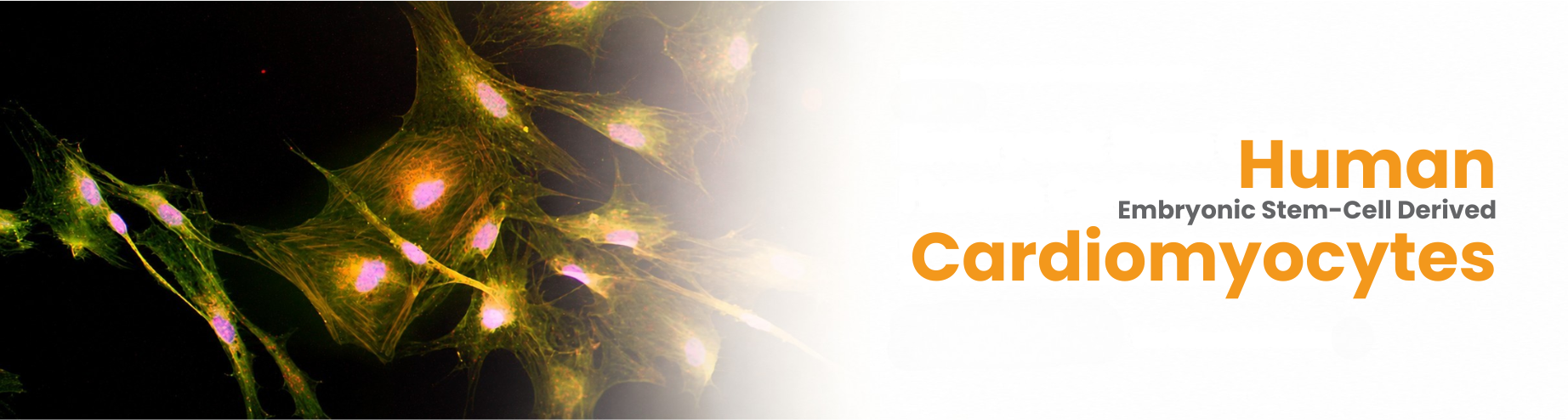
Watch Human Cardiomyocytes Beat
Representative human embryonic stem cell-derived cardiomyocyte culture showing spontaneous contractions after plating.
Ready-to-use cardiac cells for time-sensitive workflows
Use T5004 when your study requires a human-relevant cardiac model without establishing an in-house differentiation workflow first.
Why Choose Embryonic Stem Cell-Derived Cardiomyocytes?
Consistent Cellular Identity
Derived from human embryonic stem cells for consistent cellular identity and reduced variability.
Beating Within 48 Hours
Spontaneous beating is observed within 48 hours after culture.
Validated Markers
Characterized using RT-PCR and immunocytochemistry for key cardiac contractility markers.
Controlled Differentiation
Manufactured under controlled differentiation conditions to support reproducible experimental outcomes.
10–14 Day Stability
Maintains stable cardiac function for 10–14 days in culture.
Applications
Drug Discovery
Evaluate efficacy and cardiac responses in preclinical development workflows.
Cardiotoxicity Screening
Identify adverse cardiac effects earlier during compound evaluation.
Disease Modelling
Study cardiac physiology and disease mechanisms using human-relevant cell models.
Electrophysiology & Contractility Assays
Assess beating behaviour, electrical activity, and functional responses.
Tissue Engineering & Organoid Development
Build advanced 3D cardiac models and organoid systems.
Validation Data
Verified cardiac identity and function. Every batch of Human Embryonic Stem Cell-Derived Cardiomyocytes (T5004) undergoes molecular and phenotypic characterization to confirm cardiac lineage commitment and functional performance.
Click images to enlarge.
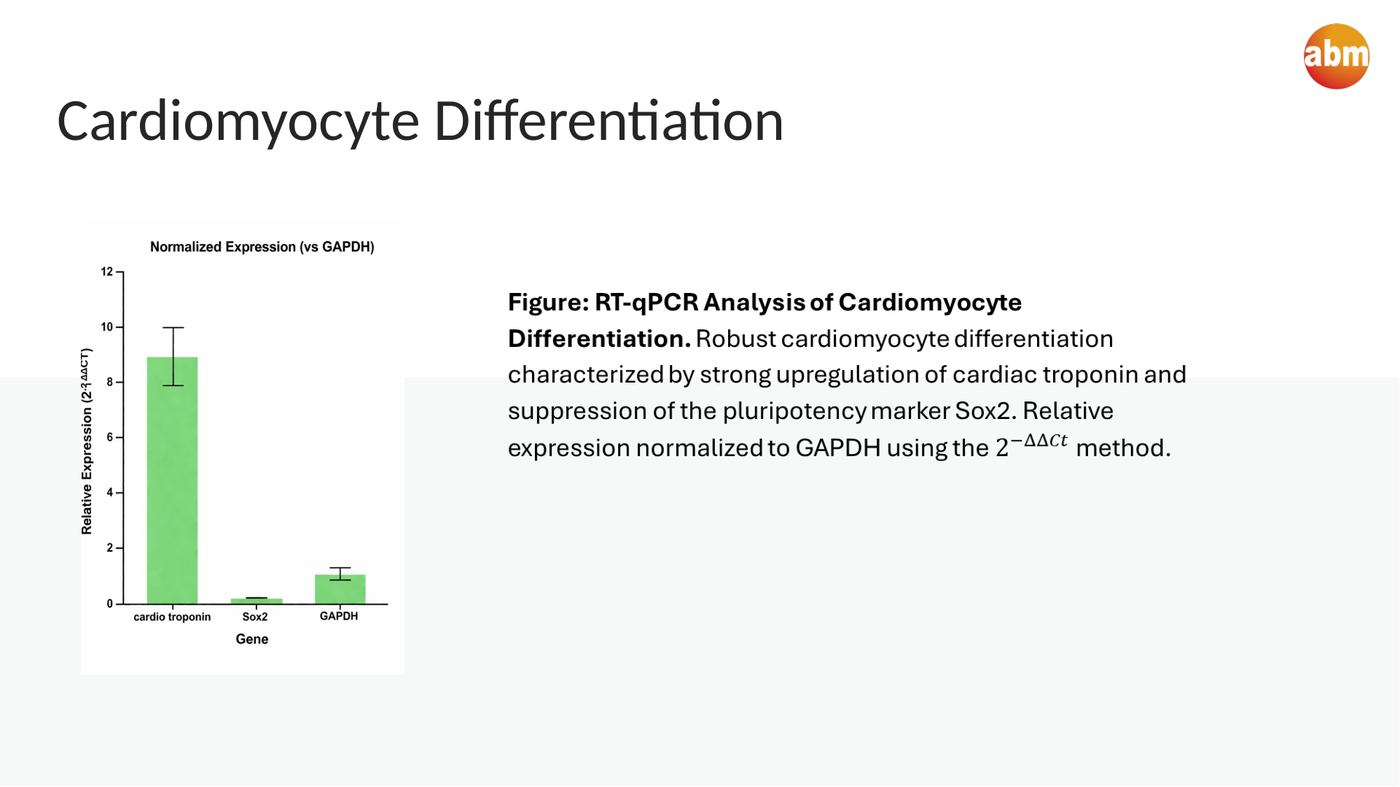
Expression Analysis
Expression analysis confirms high expression of cardiac-specific markers associated with mature cardiomyocyte identity and reduced markers of stemness.
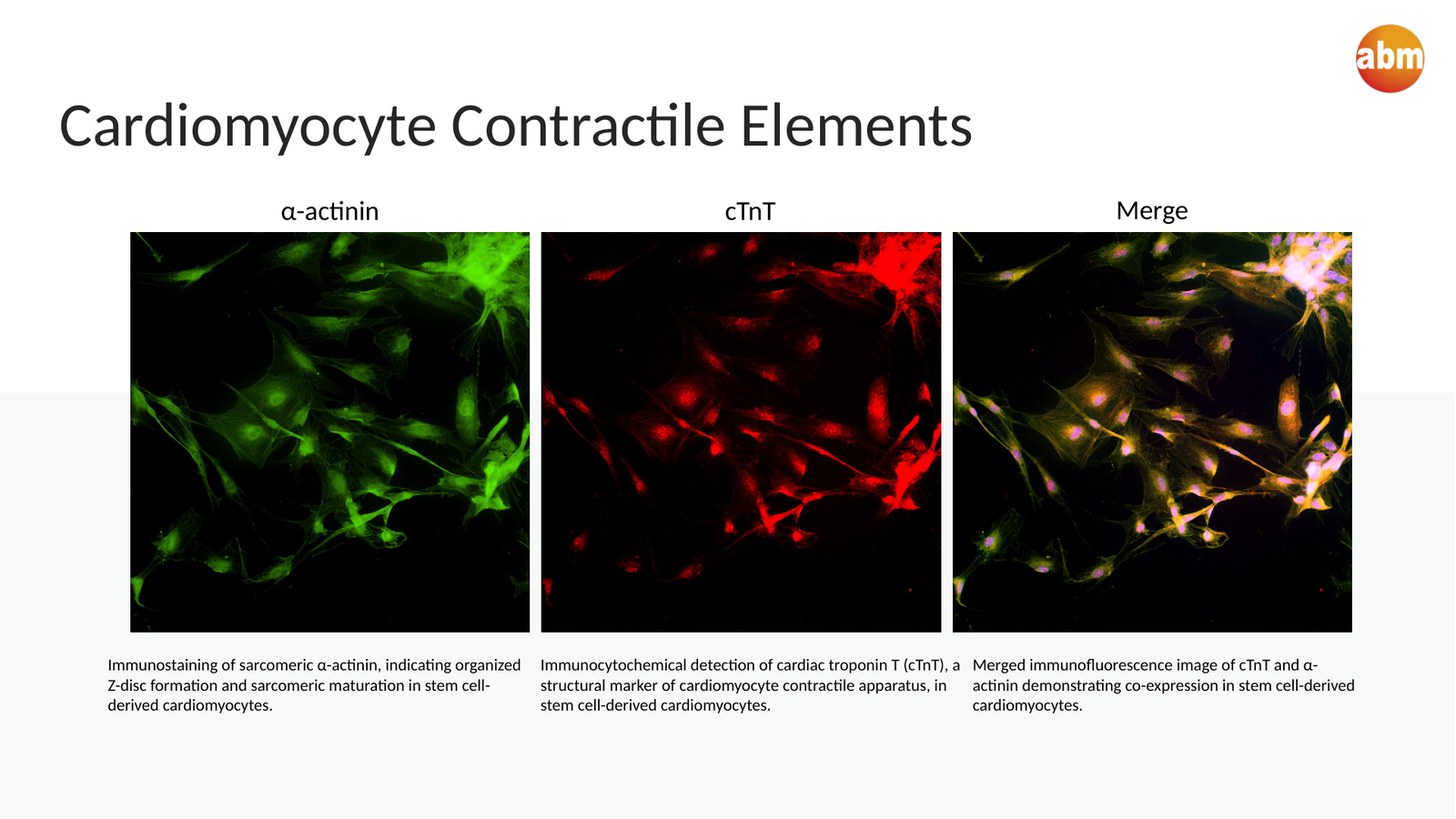
Contractile Marker Expression
Immunostaining demonstrates robust expression of key cardiac proteins, including:
- Cardiac Troponin T (cTnT) – red
- α-Actinin – green
- DAPI – blue
TM213 Differentiation Medium Kit
Generate Functional Cardiomyocytes In-House
For researchers who prefer complete control over differentiation workflows, the TM213 Differentiation Medium Kit provides a streamlined solution for generating functional cardiomyocytes directly from their own human embryonic stem cells.
Using optimized differentiation protocols and validated reagents, researchers can establish their own cardiomyocyte production workflow while leveraging the same expertise used to create T5004.
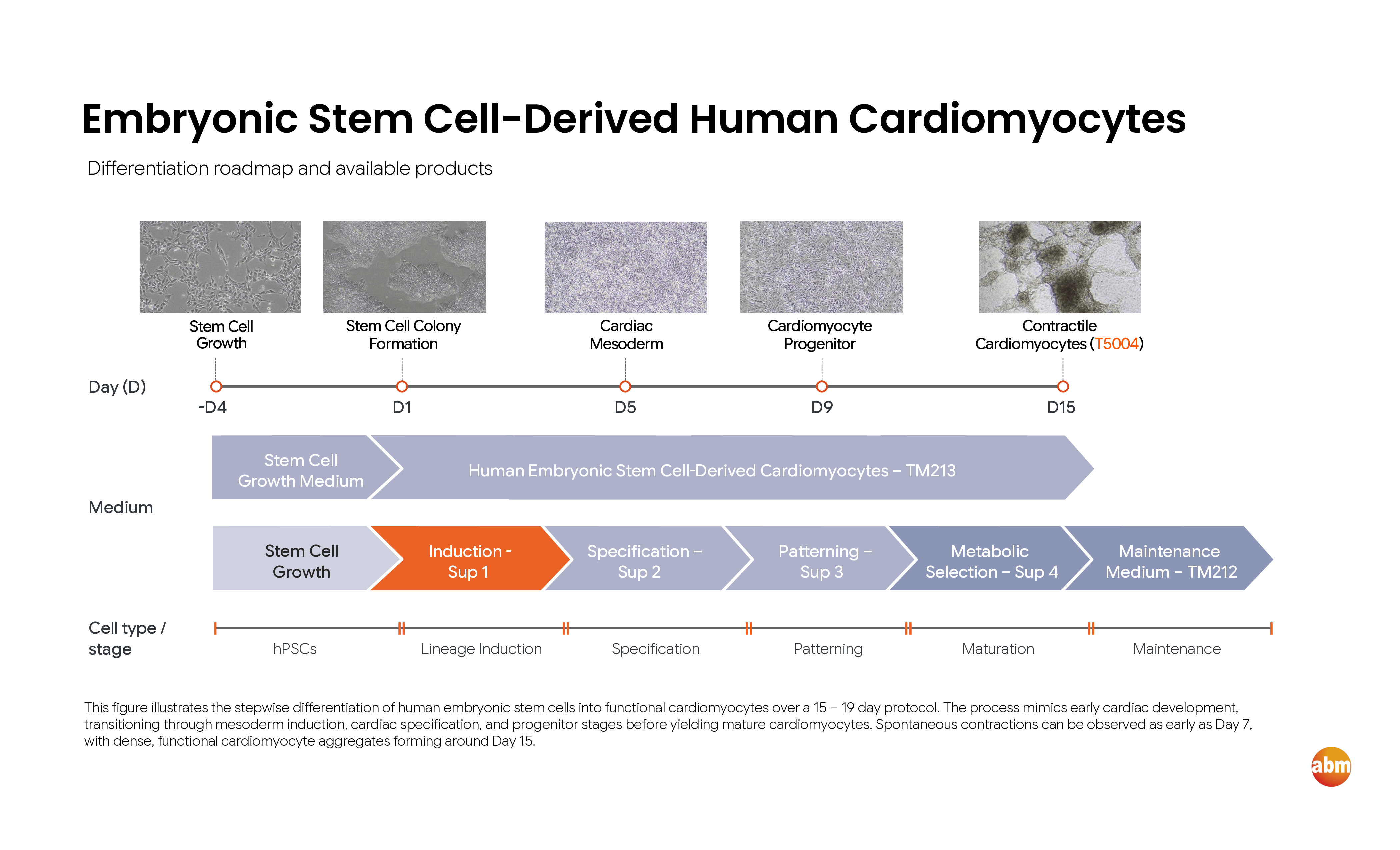
Click image to enlarge.
Why Use the TM213 Differentiation Medium Kit?
Run the Workflow In-House
Perform differentiation within your own laboratory environment.
Project-Based Production
Generate cardiomyocytes based on project demands.
Optimized Workflow
Optimized workflow designed to support consistent differentiation outcomes.
Downstream Integration
Integrates seamlessly with downstream applications including toxicity testing, disease modelling, and 3D culture systems.
Promotional Cardiac Research Bundle
Get the core products needed to build a cardiomyocyte culture workflow with ready-to-use cells, extracellular matrix support, and maintenance medium.
T5004 + 3DCelMatrix™ + Maintenance Medium
Promotional bundle includes Human Embryonic Stem Cell-Derived Cardiomyocytes, 3DCelMatrix™, and Human Cardiomyocyte Maintenance Medium.
Frequently Asked Questions
How quickly do T5004 cardiomyocytes begin beating?
Spontaneous contractions are typically observed within 48 hours after plating.
What validation is performed?
Cells are characterized using RT-PCR and immunocytochemistry for key cardiac markers including cTnT and α-actinin. Sterility and post-thaw viability are also performed to ensure no contamination and viable cell numbers.
How long are the cells functionally stable?
T5004 cardiomyocytes and those generated with TM213 remain functionally stable for approximately 10–14 days in culture.
Can I generate my own cardiomyocytes instead?
Yes. The TM213 Differentiation Medium Kit enables researchers to produce functional cardiomyocytes in-house.