

Recombinant Mouse IFNG (E. coli)
Cat. No.
Z200085
Unit
Price
$92.00
| Cat. No. | Z200085 |
| Name | Recombinant Mouse IFNG (E. coli) |
| Description | IFN-gamma is produced mainly by T-cells and natural killer cells activated by antigens, mitogens, or alloantigens. It is produced by lymphocytes expressing the surface antigens CD4 and CD8. IFN gamma receptors are expressed on all types of human cells with the exception of mature erythrocytes. IFN-gamma-receptor complexes are rapidly internalized by endocytosis. IFN-gamma has antiviral and antiparasitic activities and also inhibits the proliferation of a number of normal and transformed cells. Interferon-gamma synergises with TNF-alpha and TNF-beta in inhibiting the proliferation of various cell types. The growth inhibitory activities of IFN-gamma are more pronounced than those of the other interferons. However, the main biological activity of IFN-gamma appears to be immunomodulatory in contrast to the other interferons that are mainly antiviral. T helper cells IL-2 induces the synthesis of IFN-gamma and other cytokines. IFN-gamma acts synergistically with IL-1 and IL-2 and appears to be required for the expression of IL-2 receptors on the cell surface of T lymphocytes. Blocking of the IL-2 receptor by specific antibodies also inhibits the synthesis of IFN-gamma. |
| Organism | Mouse (M. musculus) |
| Unit quantity | 100 µg |
| Family | IL-10/Interferon Family |
| Tag | Tag Free |
| Aliases | IFN-g, If2f, Ifg |
| Gene Symbol | IFNG |
| Gene ID | 15978 |
| Accession Number | P01580 |
| Source | E. coli |
| Species | Mouse (M. musculus) |
| Appearance | Lyophilized Powder |
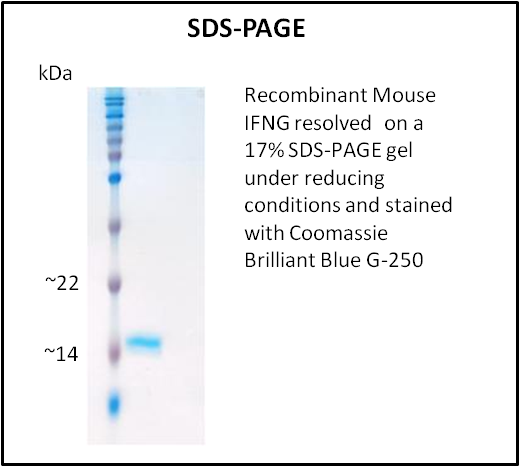
| Molecular Weight | 17 kDa |
| Endotoxin Level | <1.0 EU/µg of recombinant protein as determined by the LAL method. |
| Purity | >95% as determined by SDS-PAGE |
| Formulation | Recombinant Interferon gamma was lyophilized from a 0.2μm filtered concentrated (1.0 mg/mL) solution in PBS, pH 7.2. |
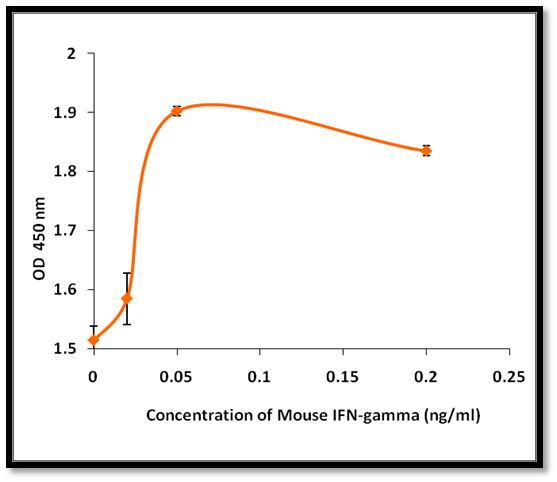
| Function | The ED(50) was determined by a viral resistance assay of mouse L929 cells and was found to be ≤ 1.0 ng/mL, corresponding to a specific activity of ≥ 1.0 x 10^6 units/mg. |
| Reconstitution | A quick spin of the vial followed by reconstitution in distilled water to a concentration not less than 0.1 mg/mL. This solution can then be diluted into other buffers. |
| Shipping Conditions | This lyophilized protein is shipped at ambient temperature. Cold packs may be used if transit temperatures are elevated. The product remains stable during normal shipping conditions. |
| Storage | Upon receipt, store lyophilized protein at –70°C for long-term storage. Short-term storage at –20°C is acceptable if necessary. Once reconstituted, store at 2–8°C for up to 1 month, or at –20°C for up to 6 months. Avoid repeated freeze/thaw cycles. |
| Usage | For research use only. Not for diagnostic or therapeutic use. |
| Material Citation | If use of this material results in a scientific publication, please cite the material in the following manner: Applied Biological Materials Inc, Cat. No. Z200085 |
Print/Download Datasheet
| How do I choose the right growth factor for my experiment? | |
|
| What is the shelf life and storage condition of this product? | |
|
The lyophilized protein is stable for at least one year from date of receipt at -70°C. Upon reconstitution, this cytokine can be stored in working aliquots at 2° - 8°C for one month, or at -20°C for six months, with a carrier protein without detectable loss of activity. Avoid repeated freeze/thaw cycles.
|
There are no references for this product yet!
This product has no review yet.
Controls and Related Product: