

Recombinant Mouse IL3
| Cat. No. | Z200445 |
| Name | Recombinant Mouse IL3 |
| Description |
IL3 is a pleiotropic cytokine primarily produced by activated T cells, but also by thymic epithelial cells, mast cells, keratinocytes, and neurons/astrocytes. IL3 supports the proliferation and differentiation of pluripotent hematopoietic stem cells and a broad spectrum of lineage-committed progenitor cells. It also influences the functional activity of mature immune cells including mast cells, basophils, eosinophils, and macrophages. IL3 was originally described under various names such as P-cell stimulating factor, burst promoting activity, multi-colony stimulating factor, thy-1 inducing factor, and WEHI-3 growth factor, reflecting its diverse biological roles. The biological activity of IL3 is mediated through binding to its high-affinity receptor, a heterodimer composed of α and β subunits. IL3 receptor engagement regulates cellular responses including proliferation, differentiation, and apoptosis. In addition to its hematopoietic functions, IL3 exhibits neurotrophic activity and may be involved in neurologic disorders. |
| Organism | Mouse (M. musculus) |
| Unit quantity | 10 µg |
| Family | Other Interleukins |
| Tag | C-6His |
| Aliases |
BPA, Csfmu, HCGF, Il-3, MCGF, PSF |
| Gene Symbol | IL3 |
| Gene ID | 16187 |
| Accession Number | P01586 |
| Source | HEK293 Cells |
| Species | Mouse (M. musculus) |
| Appearance | Lyophilized Powder |
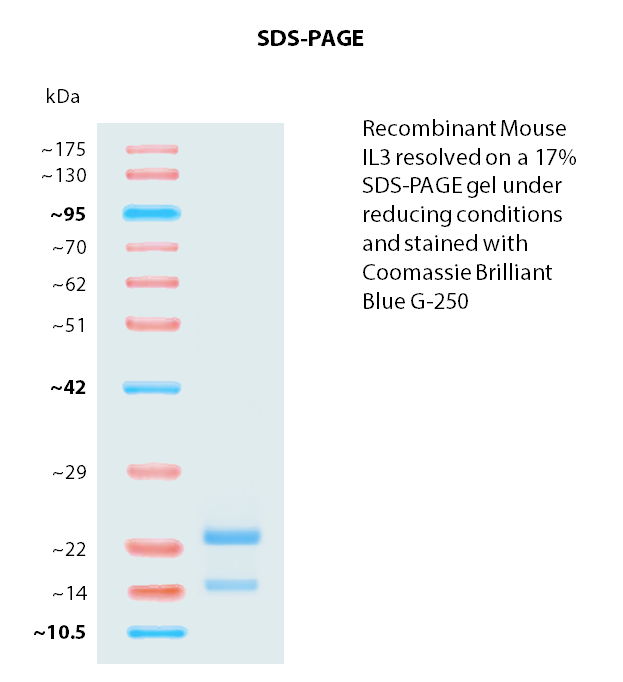
| Molecular Weight | 15-32 kDa |
| Endotoxin Level | < 0.01 EU/µg as determined by LAL test. |
| Purity |
>95% as determined by SDS-PAGE |
| Formulation | Lyophilized from a 0.2 μm filtered solution of PBS, pH 7.4 |
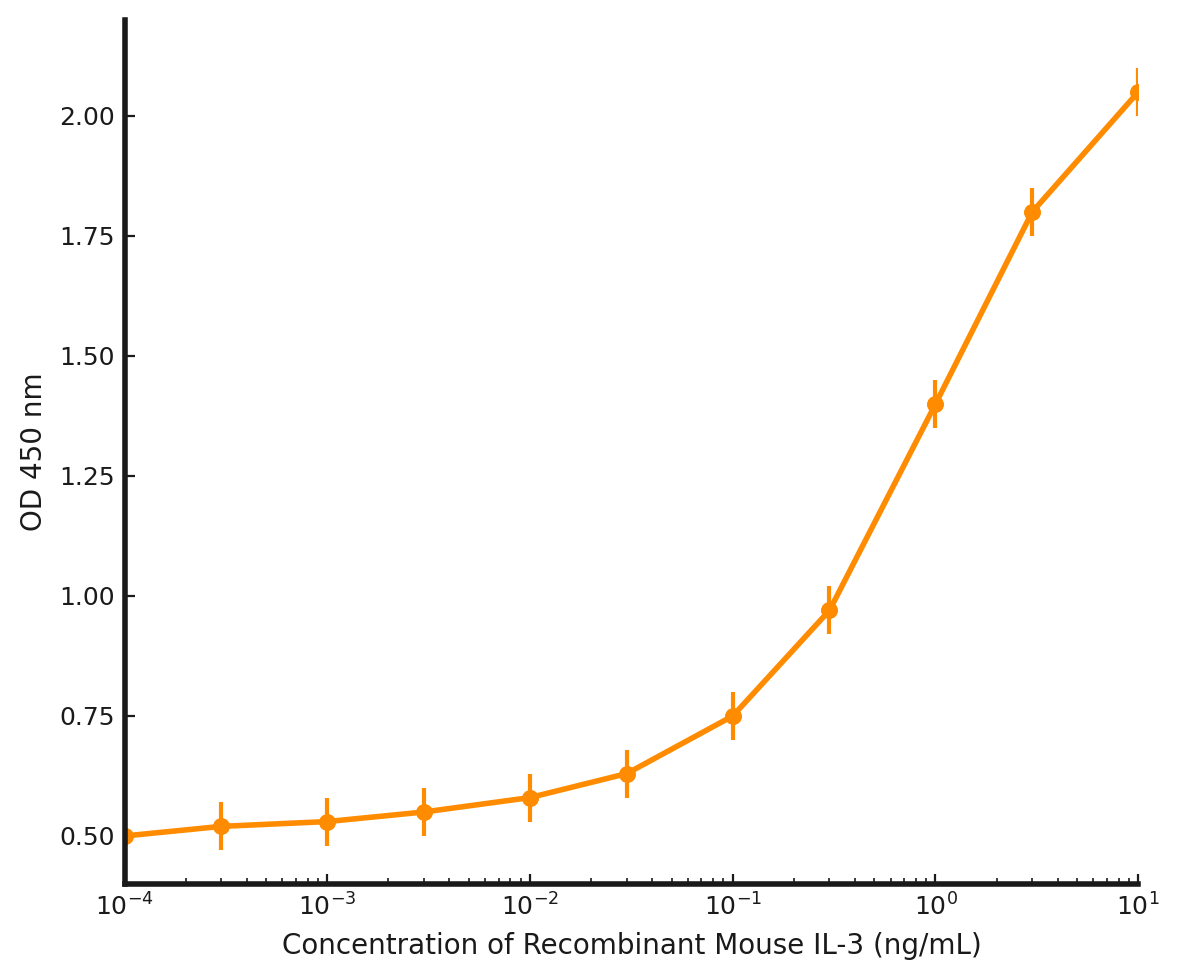
| Function | The ED50, as determined by the dose-dependent stimulation of the proliferation of NFS-60 mouse myelogenous leukemia lymphoblast cells, is 0.582 ng/mL. |
| Reconstitution | The lyophilized protein is stable for at least one year from date of receipt at -70°C. Upon reconstitution, this cytokine can be stored in working aliquots at 2° - 8°C for one month, or at -20°C for six months, with a carrier protein without detectable loss of activity. Avoid repeated freeze/thaw cycles. |
| Shipping Conditions | This lyophilized protein is shipped at ambient temperature. Cold packs may be used if transit temperatures are elevated. The product remains stable during normal shipping conditions. |
| Storage | Upon receipt, store lyophilized protein at –70°C for long-term storage. Short-term storage at –20°C is acceptable if necessary. Once reconstituted, store at 2–8°C for up to 1 month, or at –20°C for up to 6 months. Avoid repeated freeze/thaw cycles. |
| Usage | For research use only. Not for diagnostic or therapeutic use. |
| Material Citation | If use of this material results in a scientific publication, please cite the material in the following manner: Applied Biological Materials Inc, Cat. No. Z200445 |
| How do I choose the right growth factor for my experiment? | |
|
| What is the shelf life and storage condition of this product? | |
|
The lyophilized protein is stable for at least one year from date of receipt at -70°C. Upon reconstitution, this cytokine can be stored in working aliquots at 2° - 8°C for one month, or at -20°C for six months, with a carrier protein without detectable loss of activity. Avoid repeated freeze/thaw cycles.
|